Log in


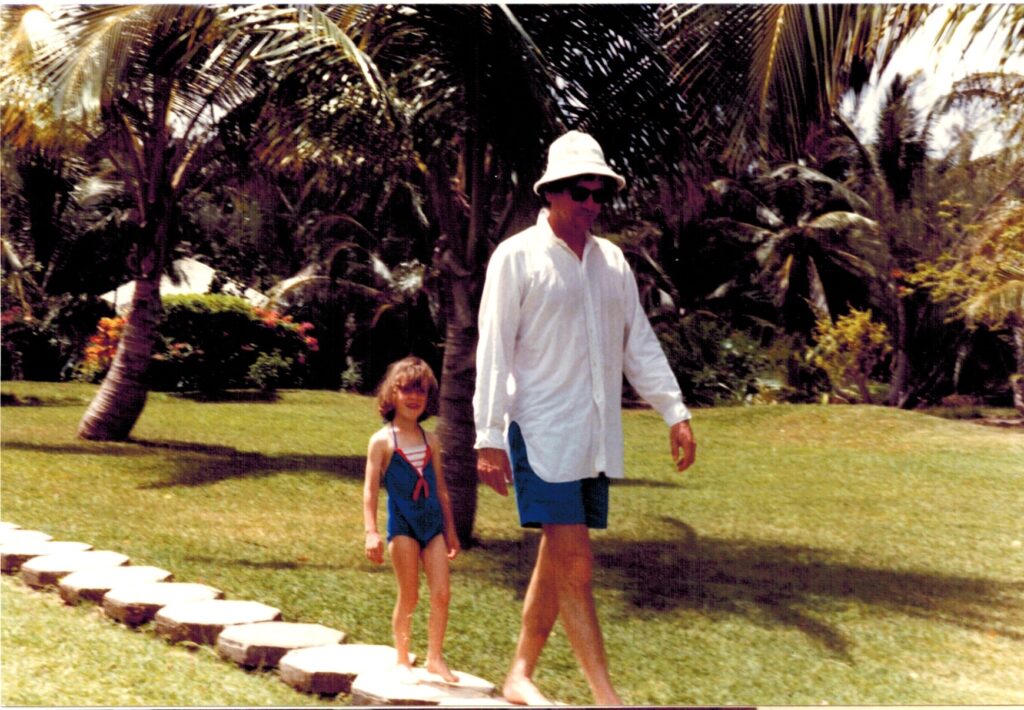
Photograph courtesy of Molly Cooper.
In the mideighties, at my mother’s insistence, my father started seeing a psychoanalyst named Dr. Stein, who had an office on East Ninety-Sixth Street. I was around nine or ten, and could reliably be found camped out on the carpet in front of our family television, recording or rewatching scenes from my favorite shows, or poring over the latest issues of Teen Beat and Bop, a pair of nail scissors handy to clip out celebrity photos for my bedroom walls. I don’t remember much of what my father said when he’d occasionally mention his visits to Dr. Stein, but one detail that stuck was that he sometimes rode up or down in the elevator with Bill Murray, who happened to live in the building.
I’m not sure who said it, most likely my mother, but the idea was floated that they resembled each other, my father and Bill. Both were tall, of medium build, with soft, rounded features, blue eyes, wavy brown hair (fair to say somewhat disheveled), and a wry, ready grin. In this comparison, to my young ears at least, there was a sense of something appropriate, even fated perhaps, about these elevator encounters.
At the time, my father was a staff writer at The New Yorker, where he had spent much of the previous two decades covering the Apollo missions and the space voyages that followed. The job, he often said, was the only one he’d ever wanted. As a child growing up in post-Depression New York City, he had been captivated by Jules Verne’s From the Earth to the Moon, which had ushered in a lifelong fascination with space exploration. As a teenager, he had set his sights on The New Yorker and—after cutting his teeth at his college paper, a mandated stint in the army, and a few frustrated months idling in journalism school—he finally caught the attention of its editor.
Some of his reverence for the magazine inevitably filtered down to me, and I can remember my excitement each week when the latest issue would land on our hallway mail table with FIRST RUN COPY printed across the front. Or the night when, celebrating my father’s fiftieth birthday, a crowd of his colleagues flooded our narrow dining room, cutting into a large chocolate cake topped with a miniature plastic spaceship and fleet of tiny spacemen touching down on a soft vanilla crust.
***
After I graduated from college, lacking my father’s clear sense of mission, I found myself in Los Angeles, with no real purpose in mind other than to put some distance between myself and the places I knew. I rented a house with two friends: an uninsulated, single-story bungalow with a cement front yard and a broken trampoline in the back. And I took a string of freelance reading and research jobs, in distant service of the film industry.
By this time, my father’s luck had begun to falter. The national interest in space travel had been on a steady decline since the Challenger disaster, and in the midnineties, he was let go from The New Yorker. He wrote occasionally for other publications, but eventually he found himself slipping into an early and unwanted retirement.
Then, one late-spring morning around the turn of the millennium, a day after he broke his leg in a pothole while running to catch a cab, my mother filed for divorce. Their marriage had never been a good one, but in its later years, they had settled into what felt like a comfortable sort of détente, so the move came as a surprise to everyone, perhaps my father most of all. He lingered in the apartment that summer and fall, until Thanksgiving morning, when my mother finally reached her limit. After that, he moved into a one-bedroom, ate defrosted chicken pot pies for dinner most nights, and learned to do laundry for the first time.
In those early years after the separation, he came out to California to visit me often. We took trips up the coast to Hearst Castle, south to Catalina, and east to Palm Springs, two native New Yorkers shrinking from the sun. I am the youngest of my siblings and had sometimes felt like a bit of an afterthought, so these trips offered a chance to get to know a person who had always seemed just slightly out of reach.
***
At some point during this time, I started to find more steady film work. After a year spent assisting a young producer in Beverly Hills, I was offered a job by a more established producer named Barry Mendel, who had an office on the Universal Studios Lot. Mendel had recently produced Wes Anderson’s Rushmore and The Royal Tenenbaums, and in the summer of 2002, when I started working for him, he was getting ready to make his third project with Anderson, The Life Aquatic with Steve Zissou. The script, cowritten by Anderson and Noah Baumbach, tells the story of an aging oceanographer, the eponymous Zissou, who sets out, after a series of failures, on what is probably his final expedition—an ill-fated voyage to exact revenge on the mythical shark responsible for killing his best friend.
The following summer, I flew from Los Angeles to Italy, where the film was to be shot. The production was based at Cinecittà Studios, on the outskirts of Rome, a sprawling compound built just before World War II, which served as a location for Ben-Hur and Roman Holiday, as well as many classics of twentieth-century Italian cinema. My desk was in the production department, on the second floor of Stage 15, next to the spaces where we were to do much of our indoor filming. I shared an office with a quiet Italian woman whose nickname was Mouse, and as preproduction got underway, I spent most of my days running errands, rolling calls for Mendel, and schooling myself in the details of film budgets and schedules. Sometimes I’d visit the art workshops, where I could see the costumes and props in their various phases of completion. On my way up to my desk, I could hover just inside the door of a soundstage while painters and carpenters worked at their tasks, watching the sets slowly rise.
My new colleagues and I met up for dinner most nights, sitting outside in the stifling heat on cobblestoned streets, and on weekend afternoons searched for movie theaters playing American films with their original English dialogue, subtitled and not dubbed. I had recently bought my first iPod, and on weekend mornings, I would walk from my small, top-floor apartment on the Via Giulia up to the Borghese Gardens, listening to the Smashing Pumpkins’ “1979” on repeat, reveling in my unimaginable good luck.
The actors weren’t there yet, but they had been cast and were due to start arriving soon. The main roles would be played by Cate Blanchett plus a few Anderson regulars: Owen Wilson, Anjelica Huston, Seymour Cassel, and, in the role of Steve Zissou, Bill Murray.
***
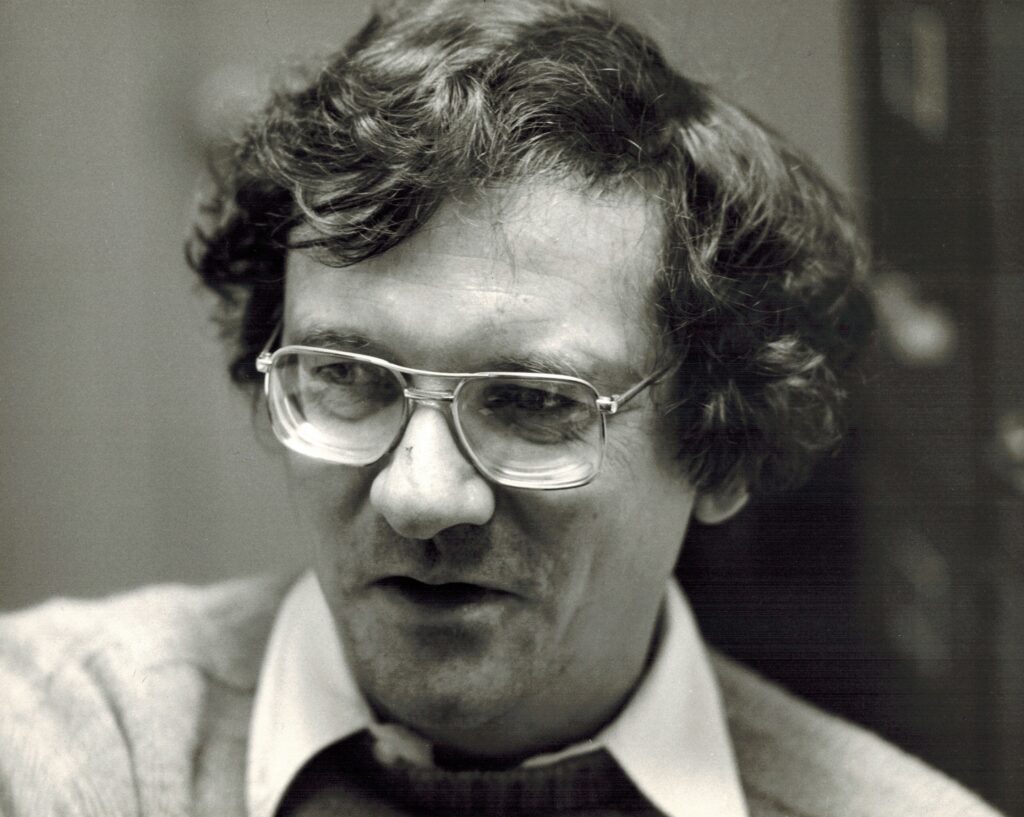
Photograph courtesy of Molly Cooper.
At the tail end of the summer, just before production was set to begin, my father came for a visit. He arrived in time for a weekend, and we spent two hot days wandering around the old Roman Forum, climbing the narrow stairwell in the dome of Saint Peter’s, and sitting on the Spanish Steps to take in the crowds. His leg hadn’t fully healed, and I noticed he was a little less sure on his feet, often needing to stop for a rest.
On Sunday evening, just as we were finishing dinner, my cellphone rang. It was a friend from the production. He explained that an actor who had flown in from New York to play a small role had gotten sick, and the casting office was having trouble finding a replacement. Someone remembered that my dad was in town—he was roughly the right age and, more importantly, a native speaker of English. No matter if he hadn’t acted before. Would he be willing to come in for a screen test?
I asked my friend if he was joking—it wouldn’t have been entirely out of character—but he wasn’t. And so, with a degree of ambivalence, I promised I would ask.
The following morning, my father, half-amused and half-curious, with a helpfully open schedule and low expectations, took a taxi to the casting studio. Never noted for his acting talent, he fumbled his way through the reading, misdelivering the lines. But something—perhaps his distinctive manner of speaking, an unplaceable, mid-Atlantic lockjaw, or some element of his signature tatty style—must have bespoke potential. Or maybe they really were just out of options. The next thing I knew, the costume department was asking me for his shoe size.
His scene was scheduled to be filmed less than forty-eight hours later, on the first official day of the shoot. The script would be delivered to his hotel, but given the tight turnaround, there would be no time for advance fittings or rehearsals. A few test shots had been filmed, but this was the first day on which formal reports and footage would be sent back to the executives in Los Angeles—the start of an ambitious, monthslong slog. A mood of harried anticipation was in the air.
***
Early on the morning of the shoot, I picked up my father from his hotel. Anxiety is a thread that weaves through my family, binding us all. I can vividly remember my mother clutching the hands of strange men on airplanes, her palms drenched in sweat, as we weathered minor turbulence. Once, she tried to refuse a community-service award because she didn’t want to appear onstage to collect it.
My father, always preternaturally comfortable at social gatherings, struggled with anything resembling a real stage, and as he got into the car that morning, he announced that he felt like a lamb going to slaughter. Since childhood, he had contended with an intermittent stutter, which often presented as a sort of boarding school affect held over from his youth. But it became more vexing when he was nervous, and as we made our way down the winding streets of central Rome toward the larger thoroughfares leading to Cinecittà, I could hear it starting to surface.
I dropped him off at the costume department and headed back to my office. His scene was first on the schedule, set to shoot right after lunch. In it, he was to play a television talk-show host interviewing Zissou and his crewmate, played by Seymour Cassel. The scene was short, consisting of only a brief exchange: my father, as the interviewer, was to ask a question; then Bill Murray was to shrug, and Cassel would give a one-line response.
On my way up to my desk, I stopped in at the soundstage. At the far end of the vast space, a small set had been erected: a faux television stage, midcentury in style and outfitted in shades of orange and brown. In the middle, flanking a low, lacquered coffee table, were three tawny, padded swivel chairs, casually awaiting their occupants.
Around lunchtime, I went to look for my father and found him sitting in a makeup chair in front of a bank of theater mirrors. His navy-blue blazer and scuffed Rockports had been traded for a roomy Italian suit, dove gray with white pinstripes, and sleek, honey-colored dress shoes. A white tissue had been fixed under his glasses to shield them from the buff makeup coating his face, and a stylist was coiffing his hair. It was hard to talk much amid these ministrations, but even in our brief exchange he imparted an air of deep dismay.
Just as I was getting back to my desk, the phone rang. The voice was familiar: it was Bill Murray, and he had a question. He had known Anderson to cast people with no previous acting experience. He had worked with some of these people in the past.
“Has your father ever acted before?” he asked. His tone sounded somewhere between amused and alarmed.
I explained, regretfully, that he had not.
There was silence, followed by a long sigh.
***
The overhead lights had been switched off, and the little set was aglow in the middle of the room. The crew were crowding around, attending to finishing touches or waiting astride apple boxes. The three cast members arrived, led in by a team of production assistants, and took their places on the set.
In the decade or two since they had stood side by side in an elevator, my father and Murray had stopped resembling each other, if they ever really had. In his pale blue oceanographer’s suit, Murray looked healthy, tanned, robust; his hair dyed blond for the role, his beard cut neat, he appeared patently self-assured. My father, in comparison, looked small and tired up on stage, his mouth fixed in a half smile, the bright lights drawing attention to his thinning hairline and shiny skin (another shared family trait).
The room quieted, and Anderson, in a tan suit and Wallabees, moved toward the set and began running through the scene. My father was first: he started in on his line but then abruptly stopped, realizing he’d mixed up two names. He announced his mistake, and Anderson gently prompted him to try again. This time, he made it through the first part of the line but forgot the second. On his third try, the words were right but the rhythm was off. This pattern continued: a name wrong, a phrase left out, the cadence not quite there. A few times, Cassel, fresh off a plane and jet-lagged, botched his delivery. But mostly the errors were my dad’s. Murray sat in the middle, arms folded, a look of mild exasperation on his face.
Finally, Anderson started rolling the camera, and I moved to the back of the room, far from the stage lights, where I walked in circles on the concrete floor, listening uneasily as the takes began to pile up. The minutes slid by, soon approaching an hour. Eventually, during a momentary reset, I slipped quietly out the stage door.
***
My father, whose natural good humor gave rise to a generous wit, had a knack for telling stories. Once back home in New York, he didn’t just dine out on this one, he feasted. He had found his new subject, and no audience was wrong. He wrote up a version of the events, playing up the gaffes, casting himself as the guileless ingenue and me as the loyal agent, and published it in his college alumni magazine. He rechristened his pontoon boat, formerly The Summer Squash, in honor of the film, commissioning a colorful wooden sign to herald its new name: The Life Aquatic. On his mantelpiece, he placed a fake Oscar gifted by a friend and a series of framed photographs from the shoot, and these items would elicit further retellings anytime a new person came for a visit: “Have I told you about my star turn?” It didn’t matter if he already had. There was always some new spin he could put on it.
At the time, this repurposing of the narrative puzzled me. It might have been the scaling up, the way in which a brief and awkward event had been granted such exalted proportions. But looking back, I think I understand it better. As much as the experience stirred something in me, it clearly stirred something deeper in him.
Late in The Life Aquatic, Zissou laments, “I haven’t been at my best this past decade.” The film is technically a comedy, but a wistfulness lies at its core. The death of Zissou’s best friend, Esteban, begins the story, and the losses continue to mount from there: Zissou’s wife, Eleanor, walks out on him, and he later loses his professional credibility, along with some of his crew. In one of the film’s final scenes, staring out the window of his minisub at the elusive jaguar shark, Zissou begins to cry. A moment later, he reaches out to touch the belly of the pregnant reporter sitting at his side. She responds by saying, “In twelve years, he’ll be eleven and a half.” A smile emerges through Zissou’s tears. He professes, “That was my favorite age.”
In a way, despite the apparent randomness of all the preceding events, it seems possible to argue that my father’s casting was appropriate—even fated. The role he played, a late mid-century reporter tasked with interviewing a pair of scientific adventurers, wasn’t so far from his lived reality. Then again, neither was the story of the film’s main character, a man pushing late middle-age, a bit bruised but still up for one last spin.
***
I flew back to Los Angeles at the end of the shoot, and a few months later, I put in my notice, packed what few belongings I had acquired in my four years on the West Coast, and made my way back to New York. I worked on several more films in the following years, but my father was never cast again. In 2016, he died.
My sisters and I had often talked about putting him on tape, recording some of his best stories for posterity, but as sometimes happens with such plans, we never got around to it. In the end, the only recording I have of him is this scene, an eight-second clip, cut into the middle of a busy party montage, in which he briefly leans forward across an old tube-television screen and delivers the correct, final version of his line: “People say Eleanor is the brains behind Team Zissou. What is Steve?”